What Environmental Practices Should You Look for in a High-Rise Window Cleaning Company?
What Environmental Practices Should You Look for in a Nashville High-Rise Window Cleaning Company?

The body content of your post goes here. To edit this text, click on it and delete this default text and start typing your own or paste your own from a different source.
When choosing a high-rise window cleaning company in Nashville, safety, experience, and insurance are important—but environmental practices should also be part of the conversation. Commercial property managers and building owners increasingly want contractors who can maintain their properties while reducing unnecessary chemical use, water waste, and environmental impact.
The key is finding a company that combines environmentally responsible practices with the equipment and experience necessary to safely clean tall and difficult-to-access buildings.
Look for Purified Water Cleaning Systems
One of the most effective ways to reduce chemical use is through purified water or water-fed pole systems.
These systems filter minerals and impurities from the water before it reaches the glass. Because purified water attracts dirt and contaminants, many exterior windows can be cleaned effectively without traditional soaps or detergents.
Water-fed poles can be especially useful for lower elevations of commercial buildings where technicians can safely work from the ground.
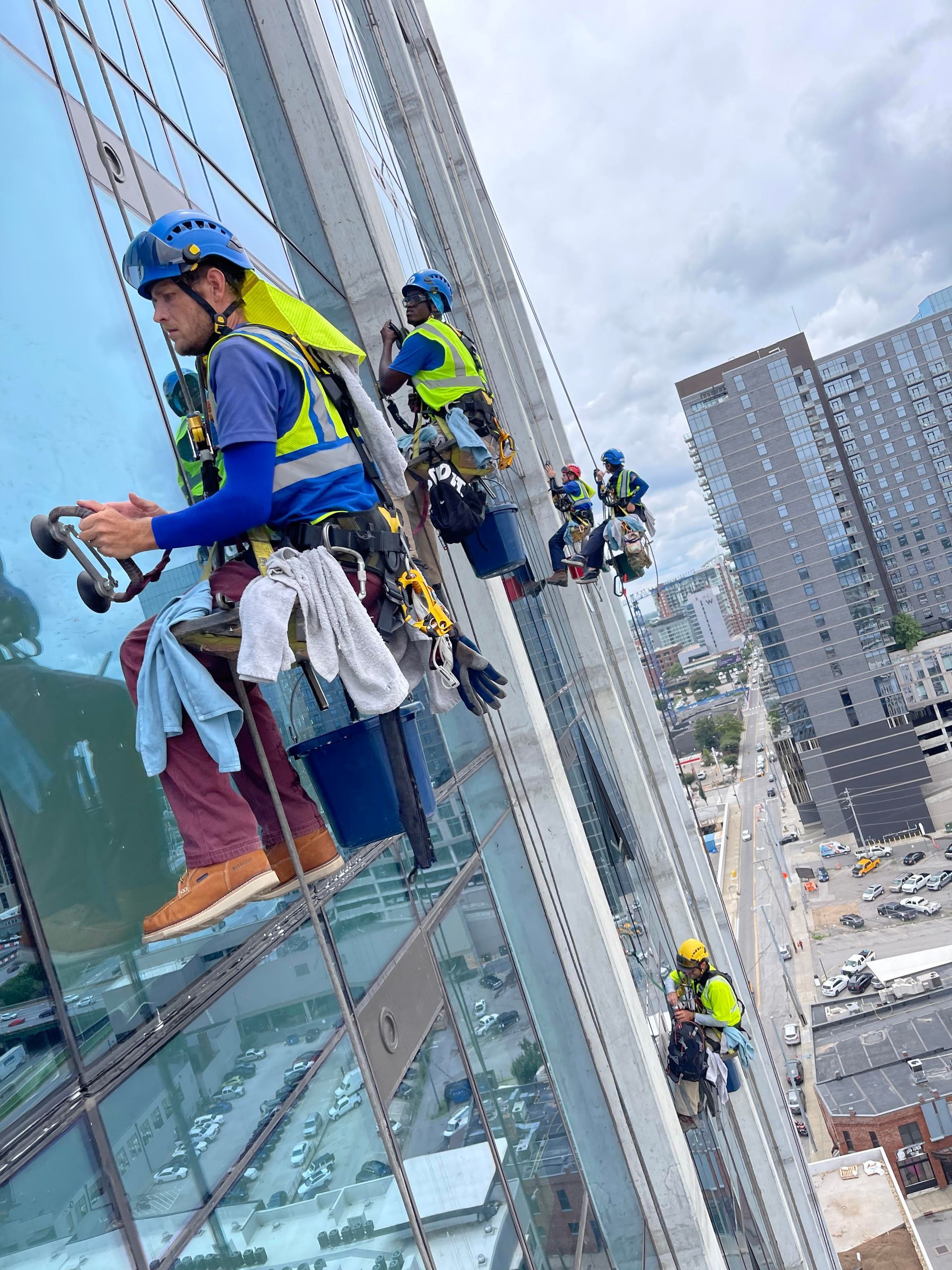
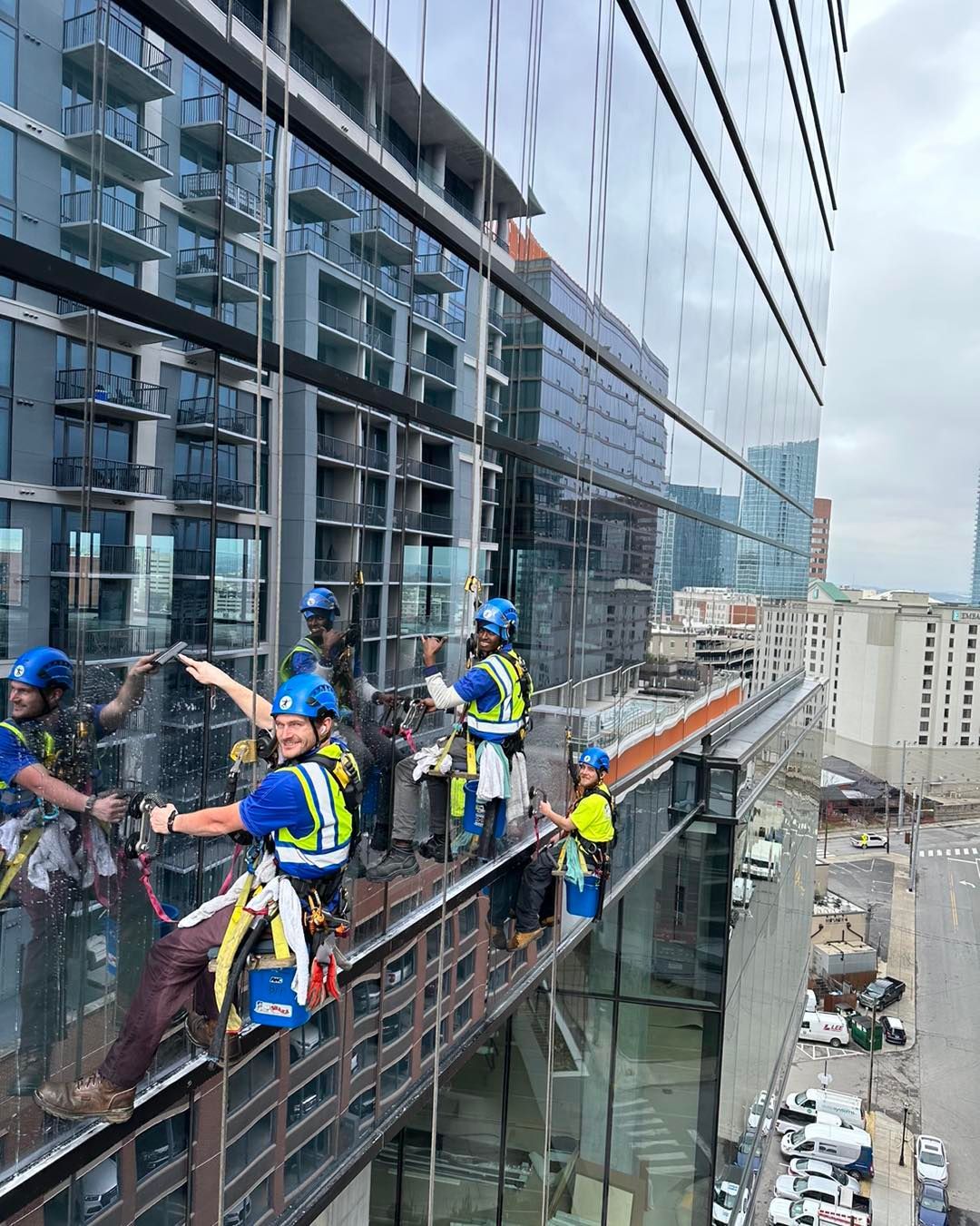
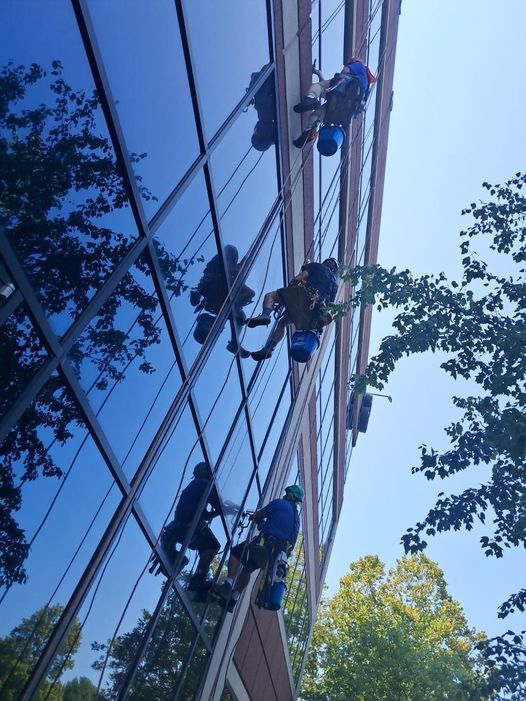
For taller areas, a professional Nashville high-rise window cleaning company may combine water-fed pole cleaning with Rope Descent Systems (RDS), lifts, or other access methods.
Ask About Responsible Chemical Use
Not every window can be cleaned with water alone.
Construction debris, mineral deposits, oxidation, grease, hard-water staining, and other contaminants may require specialized cleaning products. An environmentally responsible contractor should understand which chemicals are actually necessary and how much should be used.
Using stronger chemicals does not automatically produce better results.
Experienced technicians should evaluate the glass and surrounding building materials before selecting a cleaning solution. This can help minimize unnecessary chemical use while also protecting glass, metal panels, sealants, landscaping, and other exterior surfaces.
Consider Water Usage and Runoff
Environmental responsibility also includes paying attention to where cleaning water goes.
Depending on the cleaning method and products being used, contractors may need to consider storm drains, pedestrian areas, landscaping, sidewalks, and surrounding property.
A professional commercial window cleaning company should plan the project before work begins and understand how its cleaning methods could affect the areas below the work zone.
This becomes particularly important when performing additional exterior building maintenance services such as pressure washing, façade cleaning, or restoration.
Look for Efficient Access Methods
Environmental responsibility isn't limited to cleaning products.
The way technicians access a building can also affect the resources required to complete the project.
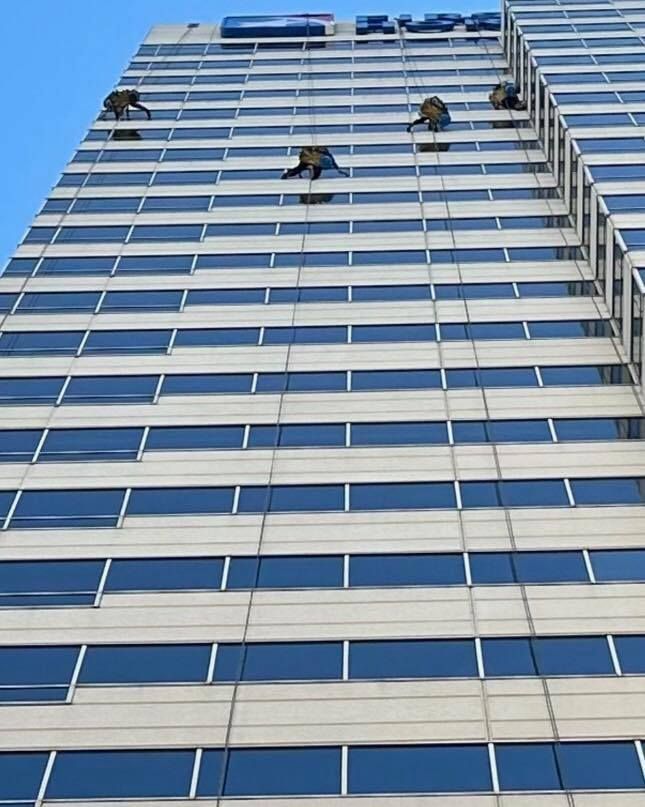
For buildings designed with compliant anchorage systems, Rope Descent Systems can provide an efficient way to access exterior glass without requiring large powered equipment for every section of the building.
Other areas may require aerial lifts, swing stages, water-fed poles, or specialized access equipment.
An experienced high-rise contractor should determine the appropriate access method based on the building—not simply use the same equipment for every property.
Proper Planning Can Reduce Waste
Efficient scheduling and project planning can also reduce environmental impact.
A contractor that understands a building's access points, anchorage system, glass conditions, cleaning frequency, and equipment requirements can arrive prepared for the job. This can reduce unnecessary trips, equipment movement, wasted materials, and delays.
For property managers, good planning has another benefit: less disruption around the property.
Environmental Practices Should Never Replace Safety
Environmental responsibility is important, but it should never come at the expense of worker or pedestrian safety.
A cleaning method should be selected based on several factors, including:
- Building height and design
- Condition and type of glass
- Type of contamination
- Available and compliant anchorage
- Pedestrian and vehicle traffic
- Surrounding landscaping and surfaces
- Water and chemical requirements
- Appropriate access equipment
The goal should be to use the safest and most effective cleaning method while minimizing unnecessary environmental impact.
Questions to Ask Your High-Rise Window Cleaning Contractor
Before hiring a company, consider asking:
- Do you use purified-water cleaning systems where appropriate?
- How do you determine when cleaning chemicals are necessary?
- What products do you use around landscaping and pedestrian areas?
- How do you manage wastewater or runoff when necessary?
- How do you determine whether to use RDS, water-fed poles, lifts, or other access methods?
- Do you plan cleaning methods based on the individual building and glass conditions?
A professional contractor should be able to explain not only what they use, but why they have selected that particular method for your building.
Choosing an Environmentally Responsible High-Rise Window Cleaning Company in Nashville
Environmental responsibility in high-rise window cleaning isn't simply about advertising “green cleaning.” It is about making thoughtful decisions throughout the project—from selecting cleaning products and controlling water usage to choosing efficient access methods and properly planning the work.
For Nashville building owners and property managers, look for a high-rise window cleaning company that can balance environmental responsibility with safety, efficiency, and quality.
The right contractor should be able to evaluate your building and develop a cleaning plan that protects the glass, the people working around the property, and the surrounding environment.