How Do High-Rise Window Cleaners Ensure Worker and Pedestrian Safety?
High-rise window cleaning is one of the most safety-focused trades in commercial property maintenance. Professional crews use detailed planning, OSHA-compliant systems, certified equipment, and constant communication to protect both workers and the public below.
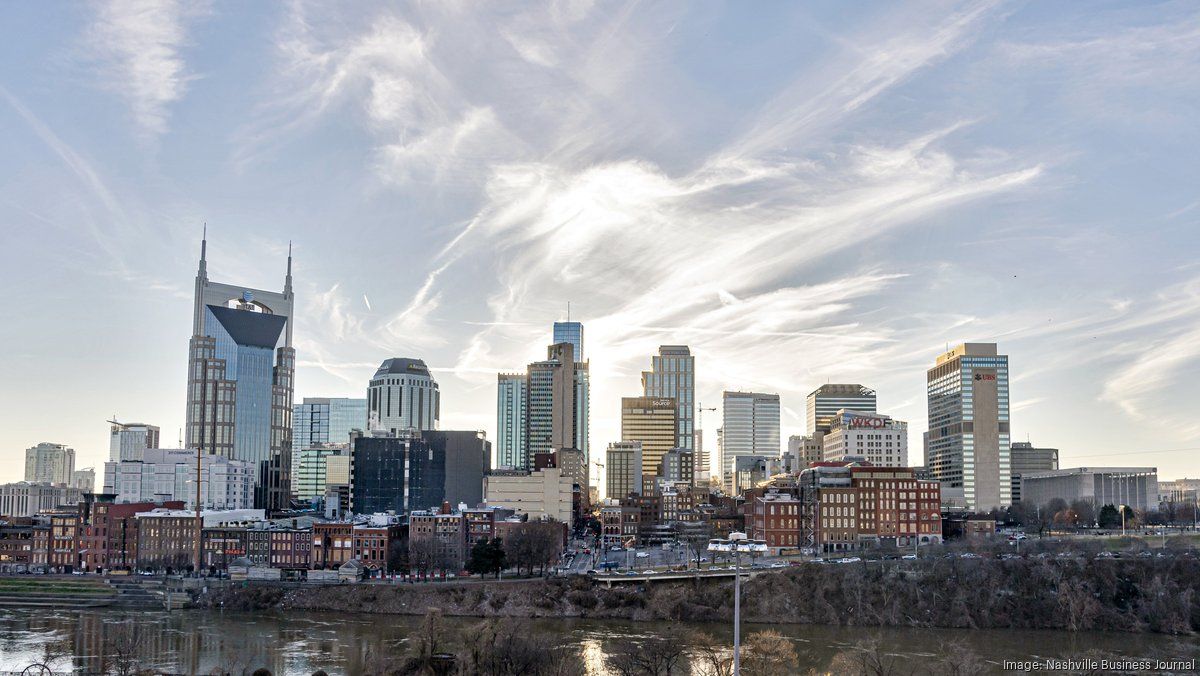
For buildings in cities like Nashville, safety is especially important because of heavy pedestrian traffic, changing weather, and complex rooftops.
Every Job Starts With a Safety Plan
Before work begins, professional crews complete a Job Hazard Analysis (JHA). This process identifies:
- Roof access points
- Anchor locations
- Fall hazards
- Public exposure risks
- Weather conditions
- Emergency rescue procedures
Teams inspect ropes, harnesses, descenders, helmets, and anchor systems before every drop. No equipment is used unless it passes inspection standards.
OSHA Compliance and Certifications Matter
Reputable high-rise window cleaning companies follow strict OSHA regulations for fall protection and suspended work. Technicians are trained in:
- Rope-Descent Systems (RDS)
- Fall arrest systems
- Rope access procedures
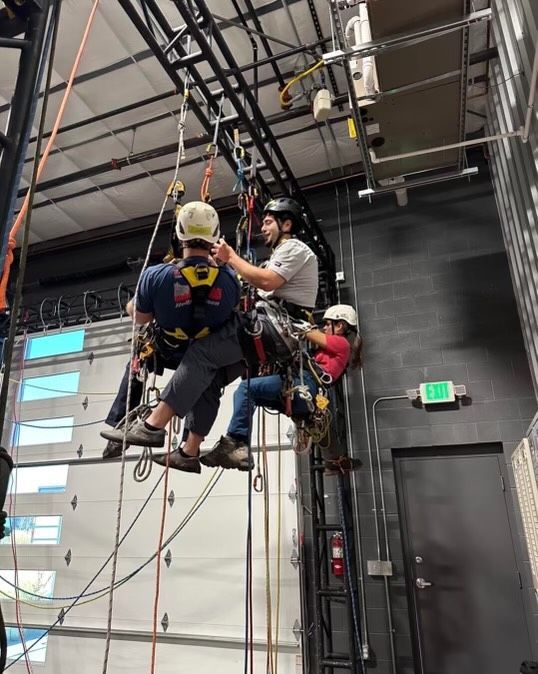
- Rescue techniques
- Hazard communication
- Equipment inspection
Many companies also pursue training through organizations like the International Window Cleaning Association to stay updated on industry standards and best practices.
Rope-Descent Systems Include Redundant Safety Measures
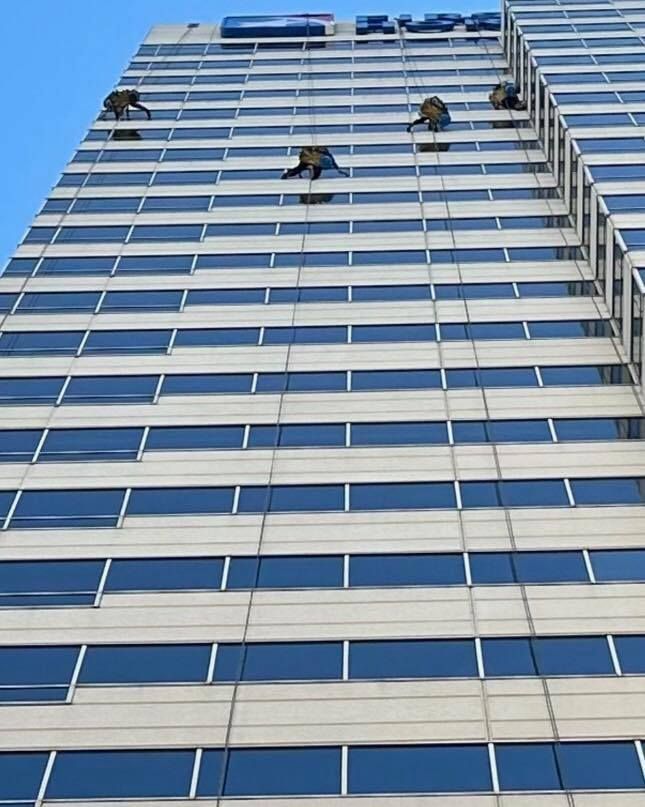
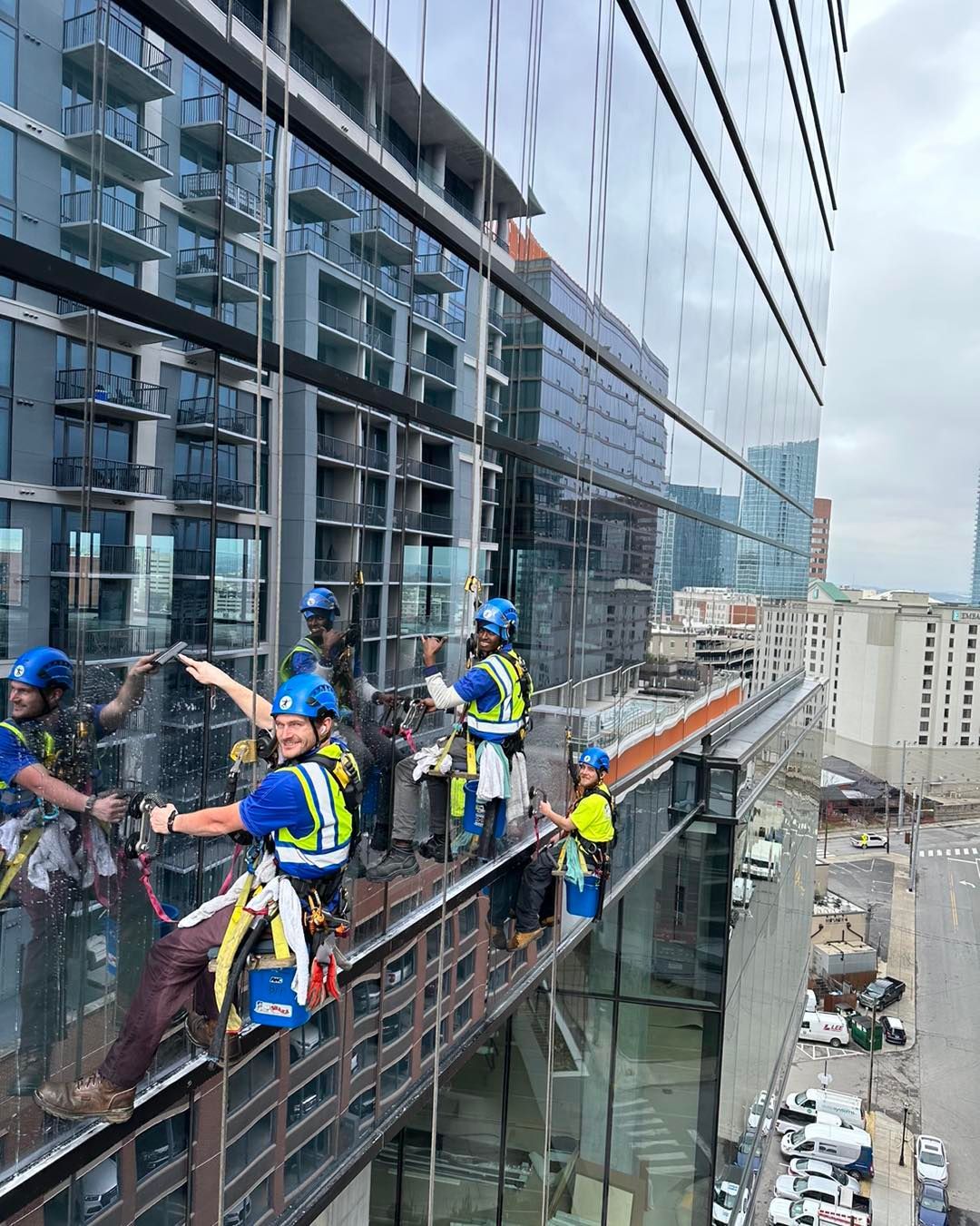
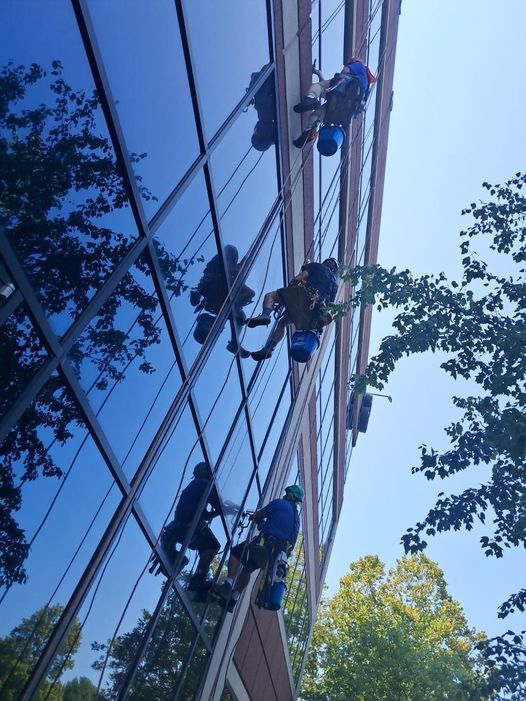
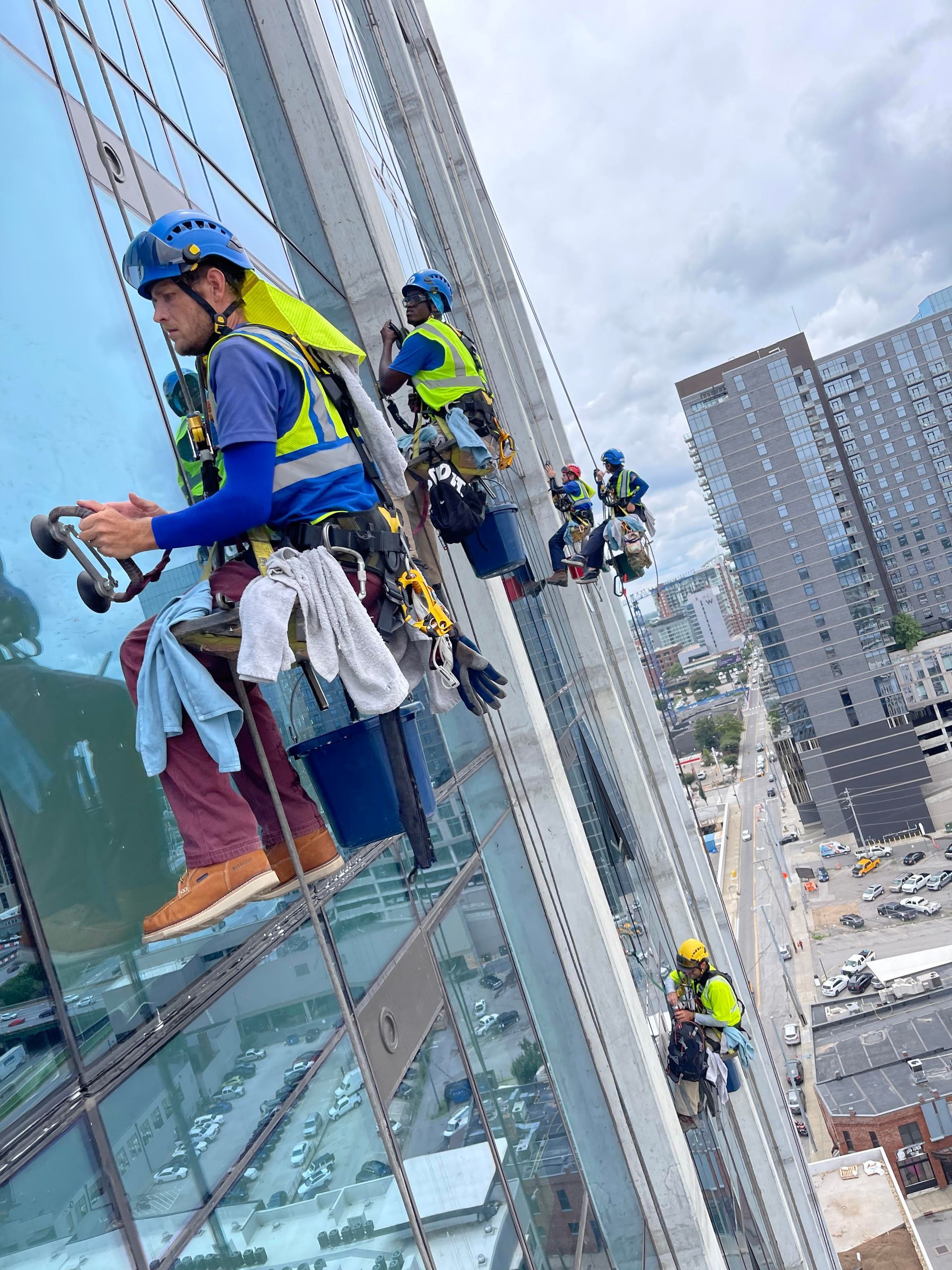
Most modern high-rise cleaning uses a Rope Descent System (RDS), where technicians descend using controlled devices attached to independent ropes.
A standard setup includes:
- A primary working rope
- A secondary backup safety line
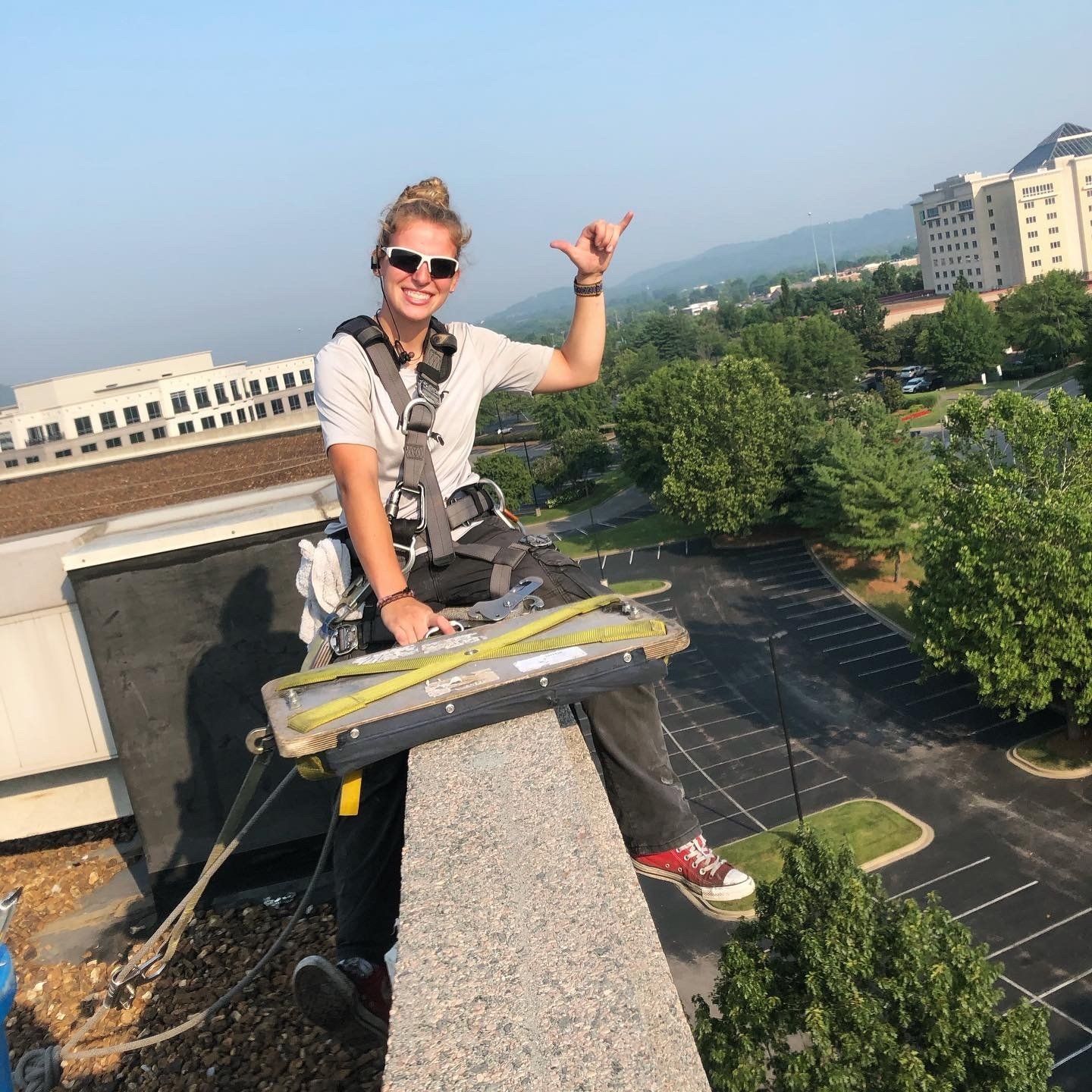
- Full-body harnesses
- Shock-absorbing lanyards
- Certified roof anchors
- Descenders and rope grabs
If one component fails, backup systems are designed to engage immediately. Redundancy is a core principle of rope access safety.
Roof Anchors and Certifications Protect Workers
High-rise technicians depend on engineered roof anchors and davit systems to safely suspend from buildings. These anchors must be inspected and certified regularly to ensure they can handle required load ratings.
Professional companies verify:
- Anchor certification records
- Structural integrity
- Proper tie-back methods
- Correct rope angles
- Manufacturer compliance
Without certified anchors, work should not proceed.
Weather Monitoring Is Critical
Wind and weather can change quickly at elevation. Professional crews constantly monitor:
- Wind speed
- Lightning
- Rain
- Temperature
- Storm movement
High winds can cause dangerous swing hazards or rope instability. Experienced crews stop operations immediately when conditions become unsafe.
Protecting Pedestrians Below
Safety isn’t only about the workers on the ropes. Ground crews actively protect pedestrians and property during operations.
Common pedestrian safety procedures include:
- Barricades and caution tape
- Sidewalk closures
- Warning signage
- Spotters on the ground
- Controlled tool handling
- Debris prevention systems
Many buildings in busy downtown areas require dedicated ground personnel whose only responsibility is monitoring public safety.
Communication Keeps Everyone Safe
Professional crews maintain constant communication between:
- Rope technicians
- Roof monitors
- Ground personnel
- Property management
Teams often use radios or headset systems to coordinate movement, monitor weather, and respond quickly to changing conditions.
Safety Culture Matters More Than Speed
The best high-rise window cleaning companies prioritize safety over rushing a project. A strong safety culture includes:
- Ongoing training
- Daily equipment inspections
- Rescue drills
- Documentation
- Clear procedures
- Accountability
For commercial property managers, choosing a contractor with documented safety systems, insurance coverage, and trained technicians is one of the most important decisions they can make.
Final Thoughts
High-rise window cleaning may look simple from the ground, but every project involves detailed planning, engineered systems, and constant risk management. From OSHA compliance and certified anchors to pedestrian barricades and weather monitoring, professional crews work carefully to ensure every technician — and every person below — stays safe.
When hiring a high-rise window cleaning company in Nashville, always ask about:
- OSHA compliance
- Insurance coverage
- Anchor certifications
- JHAs
- Rescue procedures
- Technician training
A professional company should be ready to provide documentation and explain their safety process clearly..