What's the Process for Emergency or Special-Situation High-Rise Window Cleaning?
Emergency High-Rise Window Cleaning in Nashville: What Property Managers Should Know
The body content of your post goes here. To edit this text, click on it and delete this default text and start typing your own or paste your own from a different source.
Unexpected situations happen. A severe storm can leave a building covered in debris. Construction work can deposit concrete, paint, adhesive, or other materials on glass. A major event may require a property to look its best on short notice. Building leaks, bird contamination, mineral deposits, or other unexpected conditions can also create a need for cleaning outside the normal maintenance schedule.
When this happens on a multi-story building, the solution is not simply to send someone up and start cleaning.
Emergency high-rise window cleaning requires the same careful planning, safety procedures, and access evaluation as scheduled work—sometimes even more.
What Is Considered Emergency or Special-Situation Cleaning?
Emergency or special-situation cleaning can include many circumstances that fall outside a property's regular window cleaning schedule, such as:
- Storm debris, mud, or residue
- Construction cleanup
- Concrete, paint, silicone, adhesive, or overspray on glass
- Hard-water and mineral deposits
- Bird contamination
- Unexpected staining on glass or building surfaces
- Cleaning required before an important event or inspection
- Cleaning following exterior building repairs
- Isolated areas that need immediate attention
- Difficult-access areas requiring specialized equipment
The first step is determining exactly what happened and what needs to be cleaned.
Step 1: Assess the Situation
A professional high-rise window cleaning company should begin by gathering information about the affected area.
Photos are extremely helpful. Property managers should also provide information about which elevations or floors are affected, when the problem occurred, what substance may be on the glass, and how quickly the work needs to be completed.
For unusual stains or construction debris, identifying the material is particularly important. The wrong cleaning method can permanently scratch, etch, or otherwise damage glass and surrounding building materials.
Step 2: Evaluate Building Access and Safety
Before work begins, the contractor must determine how technicians can safely reach the affected area.
Depending on the building, access may involve:
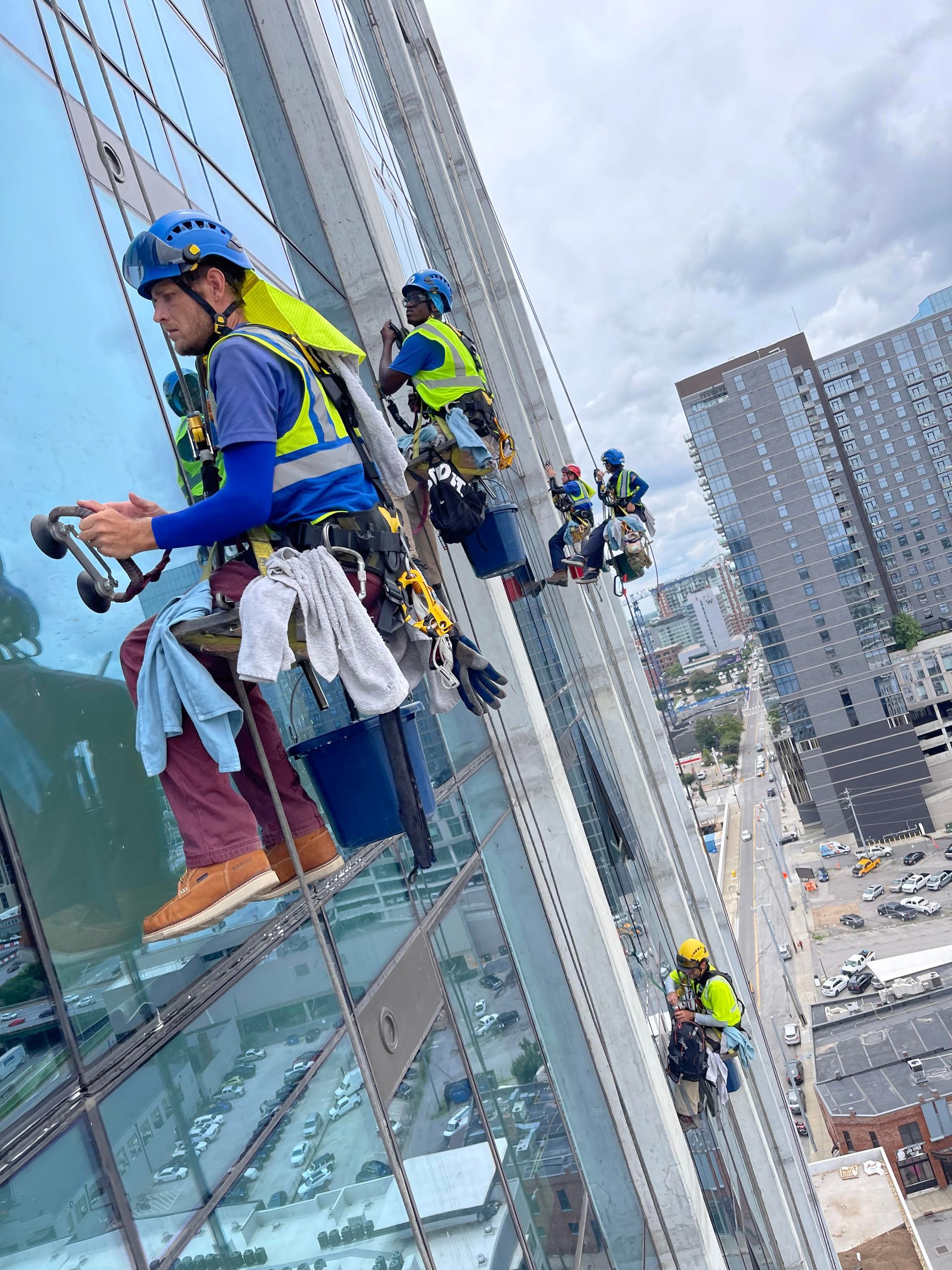
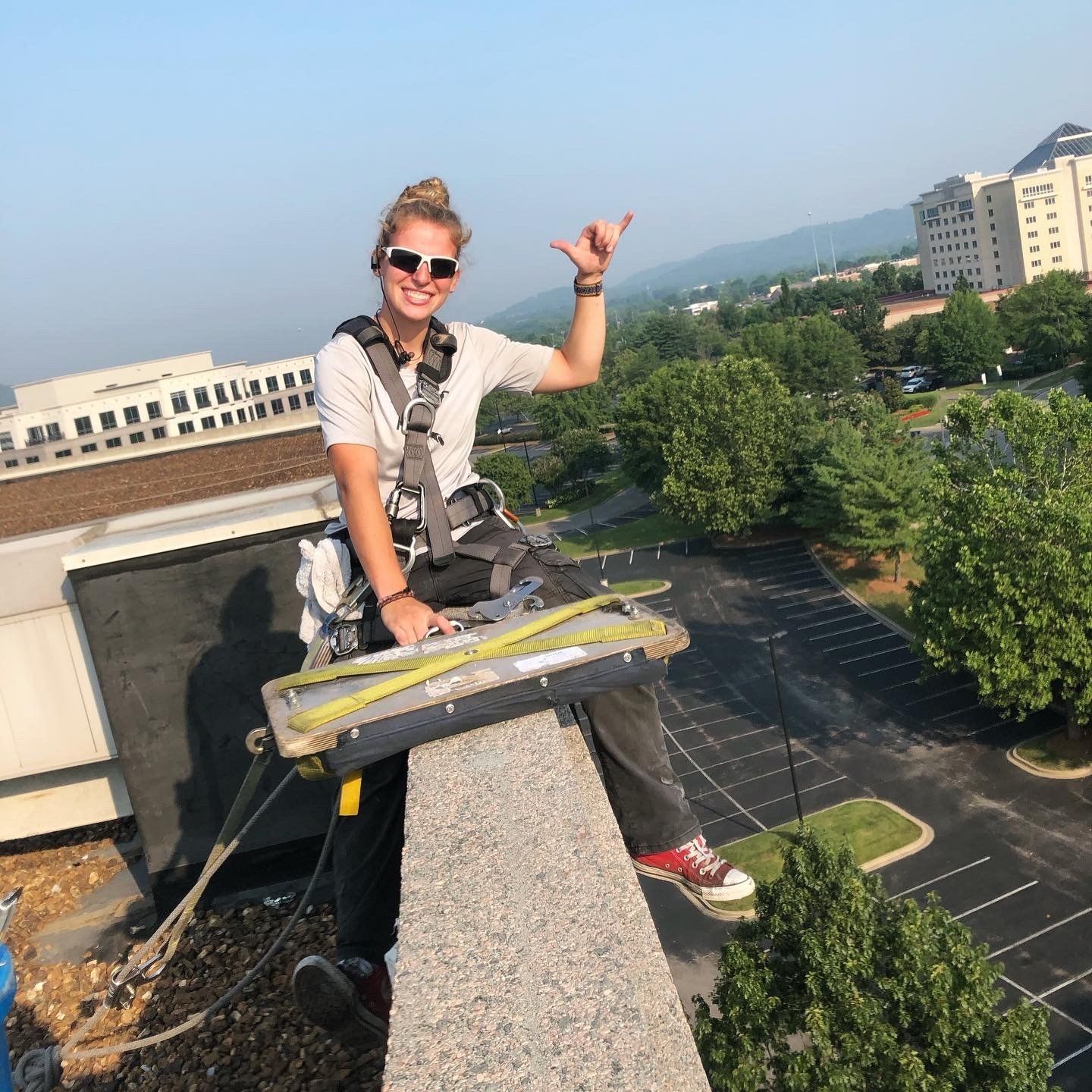
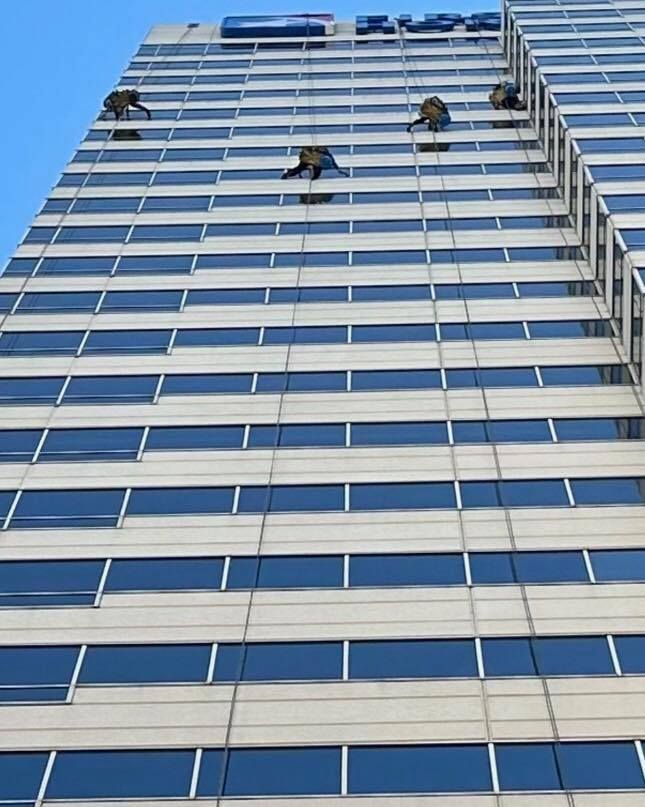
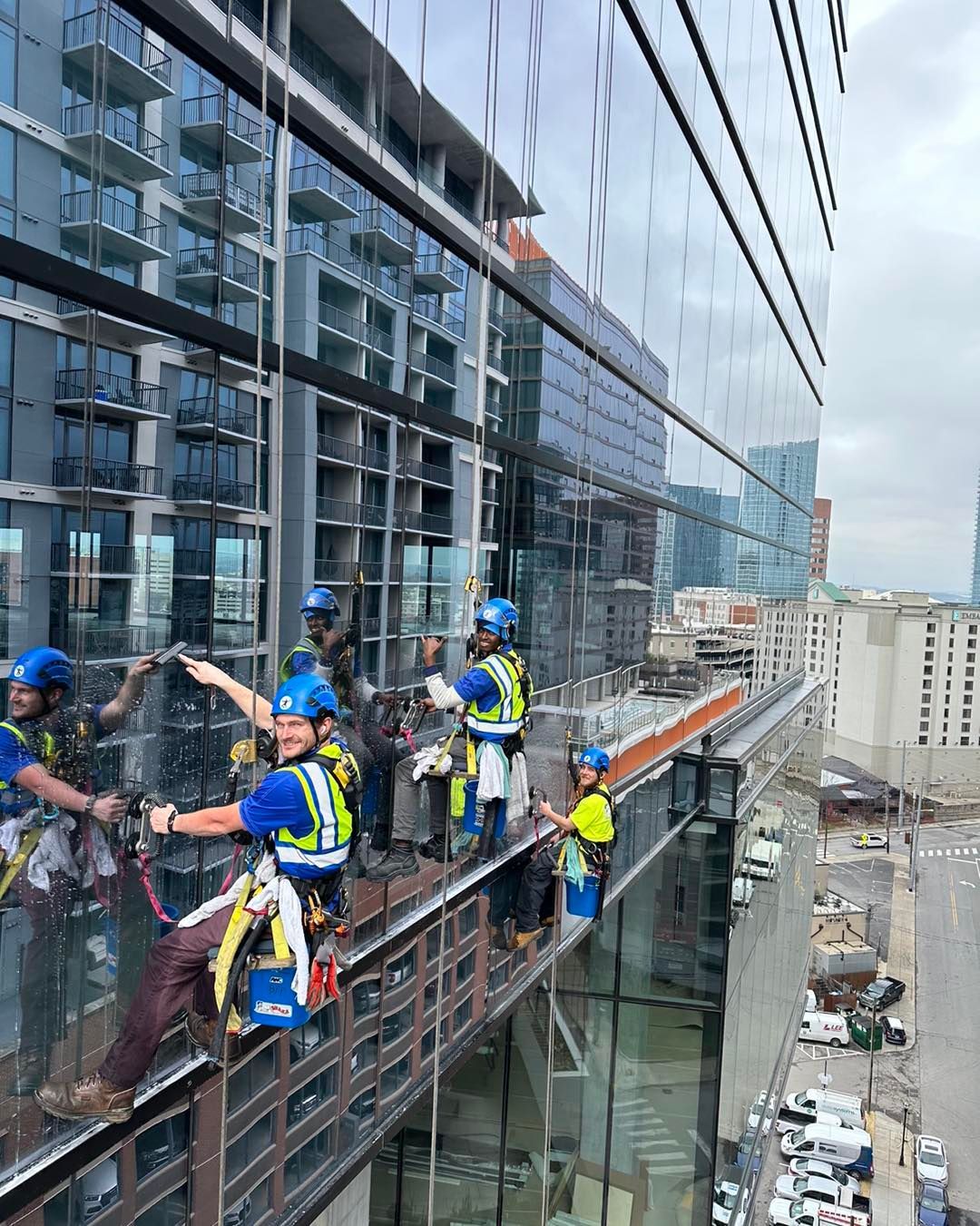
- Rope Descent Systems (RDS)
- Rope-access techniques
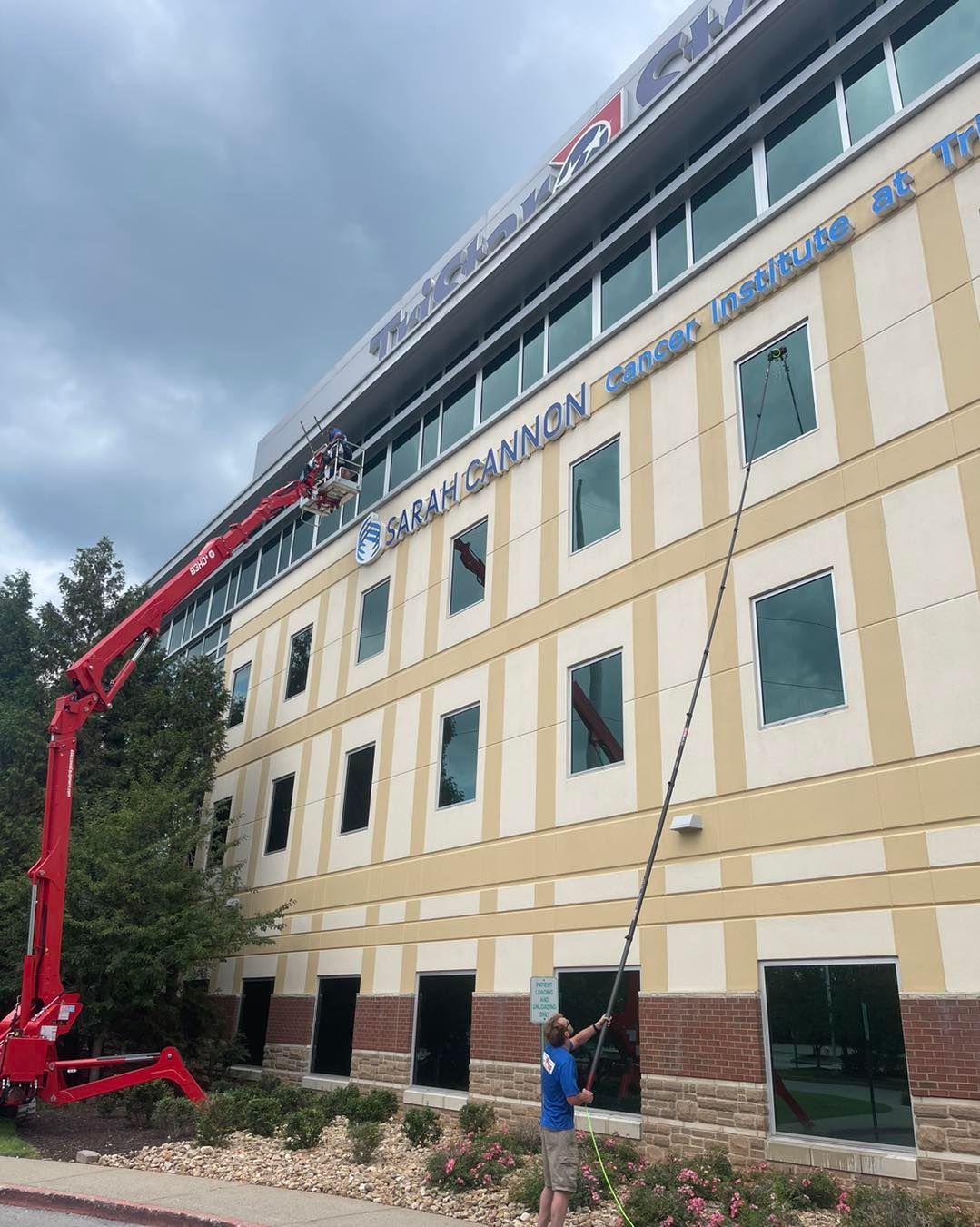
- Aerial or boom lifts
- Water-fed poles
- Swing stages
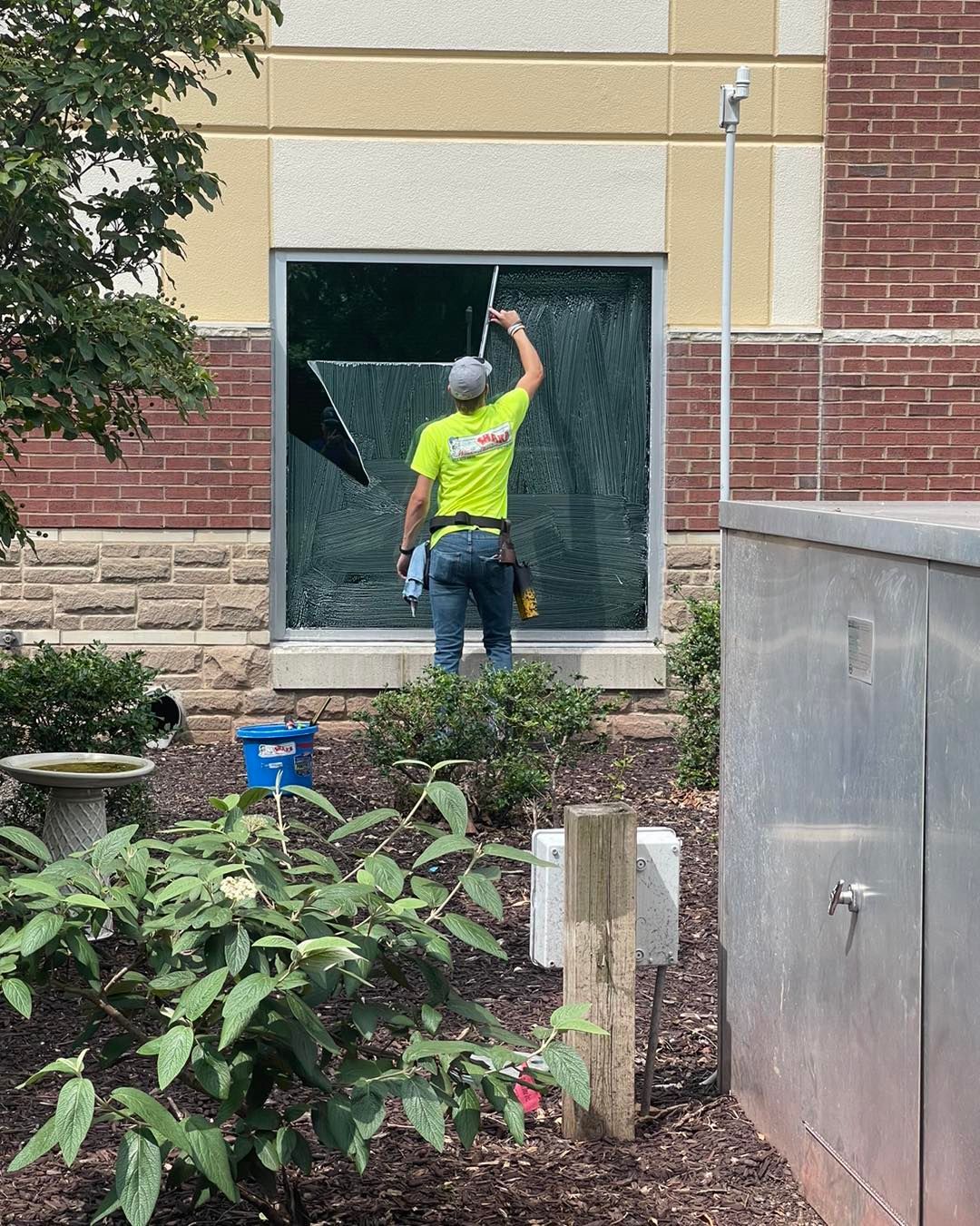
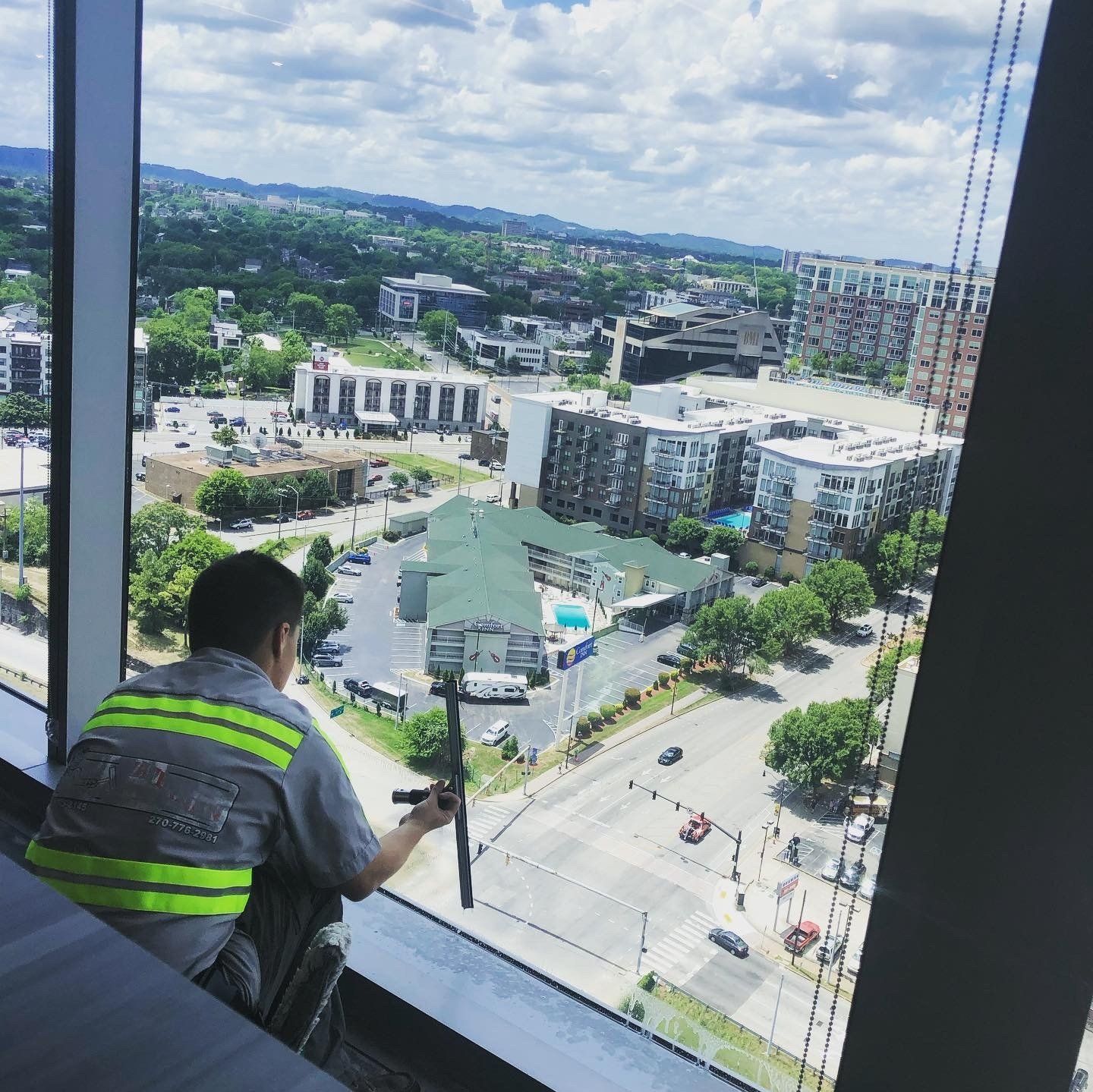
- Interior access
- A combination of access methods
For RDS work, an emergency does not eliminate normal safety requirements.
The contractor still needs to evaluate the building's anchorage system, roof access, drop locations, pedestrian exposure, weather conditions, electrical hazards, and other site-specific risks.
Property managers should be prepared to provide current information regarding the building's roof anchors and davits when those systems will be used.
Urgency should never replace proper safety planning.
Step 3: Determine the Correct Cleaning Method
Not every special situation can be handled with standard soap, water, and a squeegee.
Construction debris, mineral deposits, oxidation, paint, adhesive, silicone, or other contaminants may require specialized products or restoration procedures.
Before treating a large area, technicians may perform a small test section to determine whether the proposed method will safely produce the desired result.
This is particularly important when dealing with glass that may already be scratched, etched, stained, or damaged.
Step 4: Create a Site-Specific Work Plan
Once the condition and access method have been evaluated, the contractor can develop a plan for completing the work.
The plan may consider crew size, equipment requirements, RDS drop locations, lift placement, pedestrian control, building access, security procedures, weather, and the property's operating schedule.
For occupied commercial buildings, coordination with property management can be especially important. Entrances, sidewalks, loading areas, parking spaces, or other areas may need to be temporarily controlled while overhead work is performed.
Step 5: Complete the Work and Document Any Problems
During special-situation cleaning, technicians may discover conditions that were not visible from the ground.
These could include damaged seals, loose building materials, deteriorating caulk, unusual staining, inaccessible areas, damaged glass, or potential problems with the building's access system.
When appropriate, these conditions should be photographed and communicated to property management.
That makes the window cleaning contractor another set of trained eyes on areas of the building that are difficult to inspect from the ground.
Can Emergency High-Rise Window Cleaning Be Done Immediately?
Sometimes—but not always.
Response time depends on the nature of the problem, weather, crew availability, equipment requirements, building access, and whether the property has the appropriate systems in place for the proposed access method.
For example, if RDS is the best way to reach the affected area but the building cannot provide the necessary anchorage documentation, another access method may need to be considered.
This is one reason property managers should address building access and anchorage requirements before an emergency occurs.
Prepare Before You Need Emergency Cleaning
One of the best ways to make emergency high-rise window cleaning easier is to establish a relationship with an experienced contractor before there is a problem.
A contractor already familiar with the property may know the building's roof access, anchor and davit locations, security procedures, loading areas, difficult elevations, and other site-specific conditions.
Maintaining current anchor and davit inspections, building access information, and property contacts can also reduce unnecessary delays when an unexpected situation occurs.
Emergency High-Rise Window Cleaning in Nashville
Nashville continues to add high-rise offices, hotels, residential towers, healthcare facilities, and mixed-use properties. These buildings often have complicated façades and areas that cannot be reached using traditional window cleaning methods.
When unexpected cleaning is required, choosing a contractor experienced with Nashville high-rise window cleaning, Rope Descent Systems, difficult-access work, aerial lifts, and specialized glass cleaning can make a significant difference.
At Shaka Window Cleaners, we work with commercial and high-rise properties throughout the Nashville market and evaluate each special situation individually. Our goal is to determine a safe, practical access method and provide property managers with a clear plan for addressing the problem.
Need Help With an Unexpected High-Rise Cleaning Situation?
If your Nashville property has storm residue, construction debris, staining, difficult-access glass, or another unexpected cleaning issue, contact Shaka Window Cleaners. Photos of the affected area, building height, location, and information about your building's access and anchorage systems can help us evaluate the situation and determine the appropriate next steps.