What Accreditations and Training Should High-Rise Window Cleaning Technicians Have?
What Training and Certifications Should High-Rise Window Cleaners Have in Nashville?
The body content of your post goes here. To edit this text, click on it and delete this default text and start typing your own or paste your own from a different source.
When hiring a company for high-rise window cleaning in Nashville, price and availability should never be the only considerations. The technicians working on your building may be hundreds of feet above the ground, using specialized access equipment and working around employees, tenants, pedestrians, and valuable property.
That means proper training isn't simply a nice credential to see on a company website. It is an important part of determining whether a contractor is prepared to perform the work safely and professionally.
Here are some of the qualifications and training building owners and property managers should look for.
1. Rope Descent System (RDS) Training
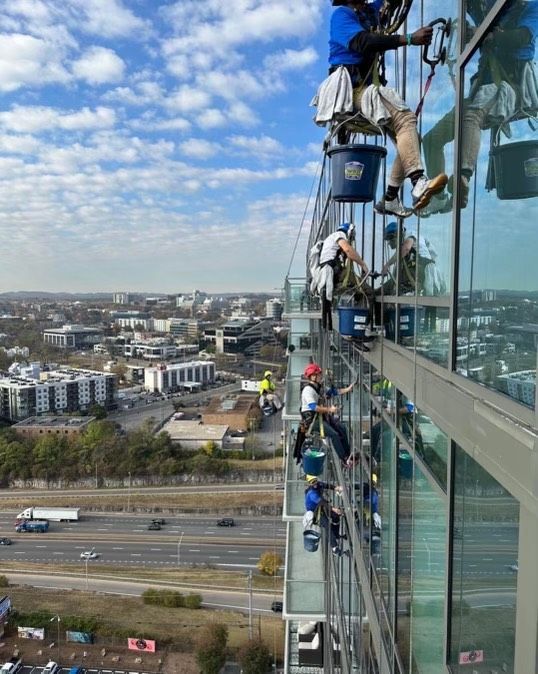
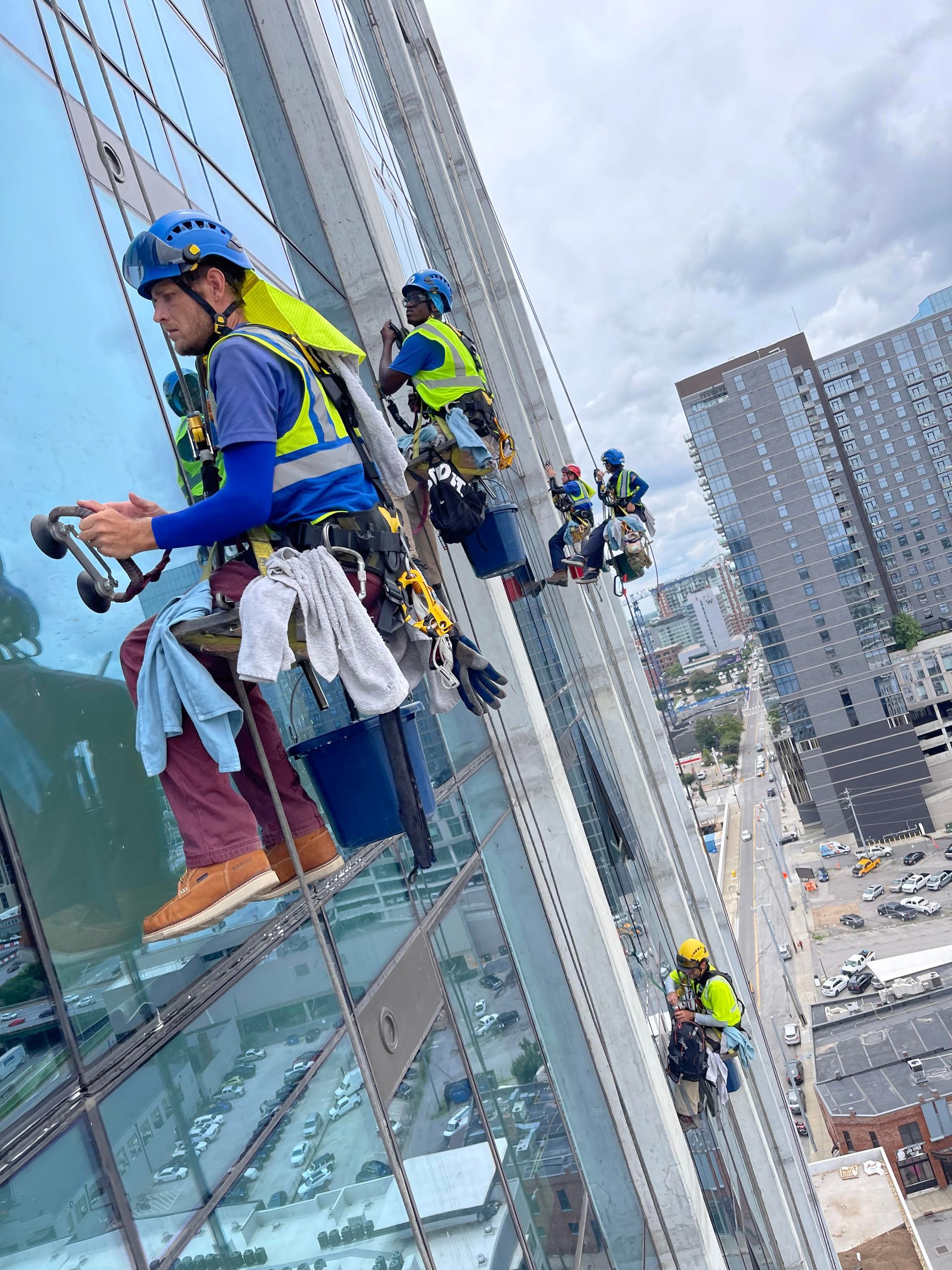
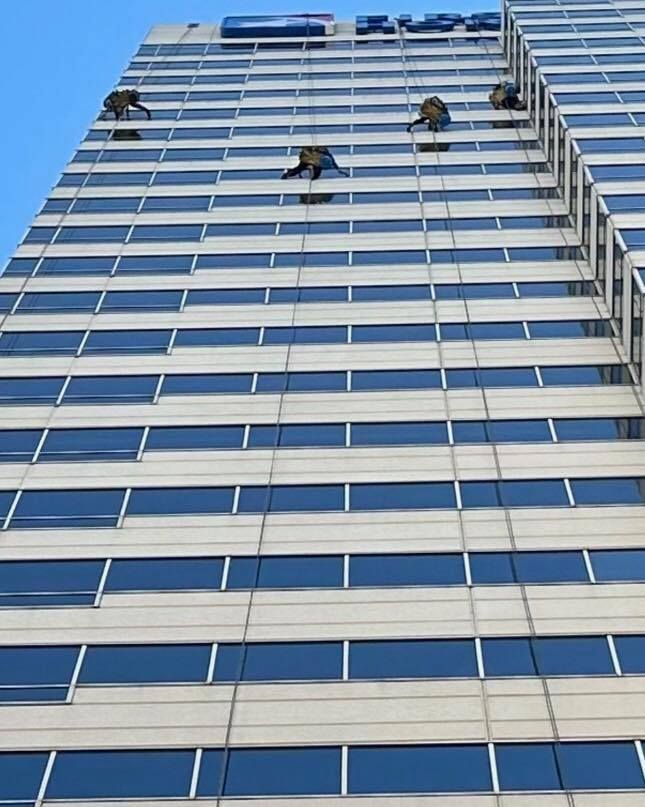
Rope Descent Systems are commonly used to access exterior windows and façades on taller commercial buildings.
Technicians performing RDS work should receive specific training covering the equipment and procedures involved in suspended work. This should include areas such as:
- Proper use and inspection of ropes, harnesses, descent devices, and fall-protection equipment
- Rigging and tie-back procedures
- Safe use of building anchorage
- Edge protection and rope protection
- Controlled ascent and descent
- Hazard recognition
- Equipment inspection
- Emergency and rescue procedures
A technician who knows how to clean a window is not automatically qualified to perform suspended high-rise work. The access method itself requires specialized knowledge and hands-on training.
2. Fall-Protection Training
Falls are one of the most serious hazards associated with high-rise building maintenance.
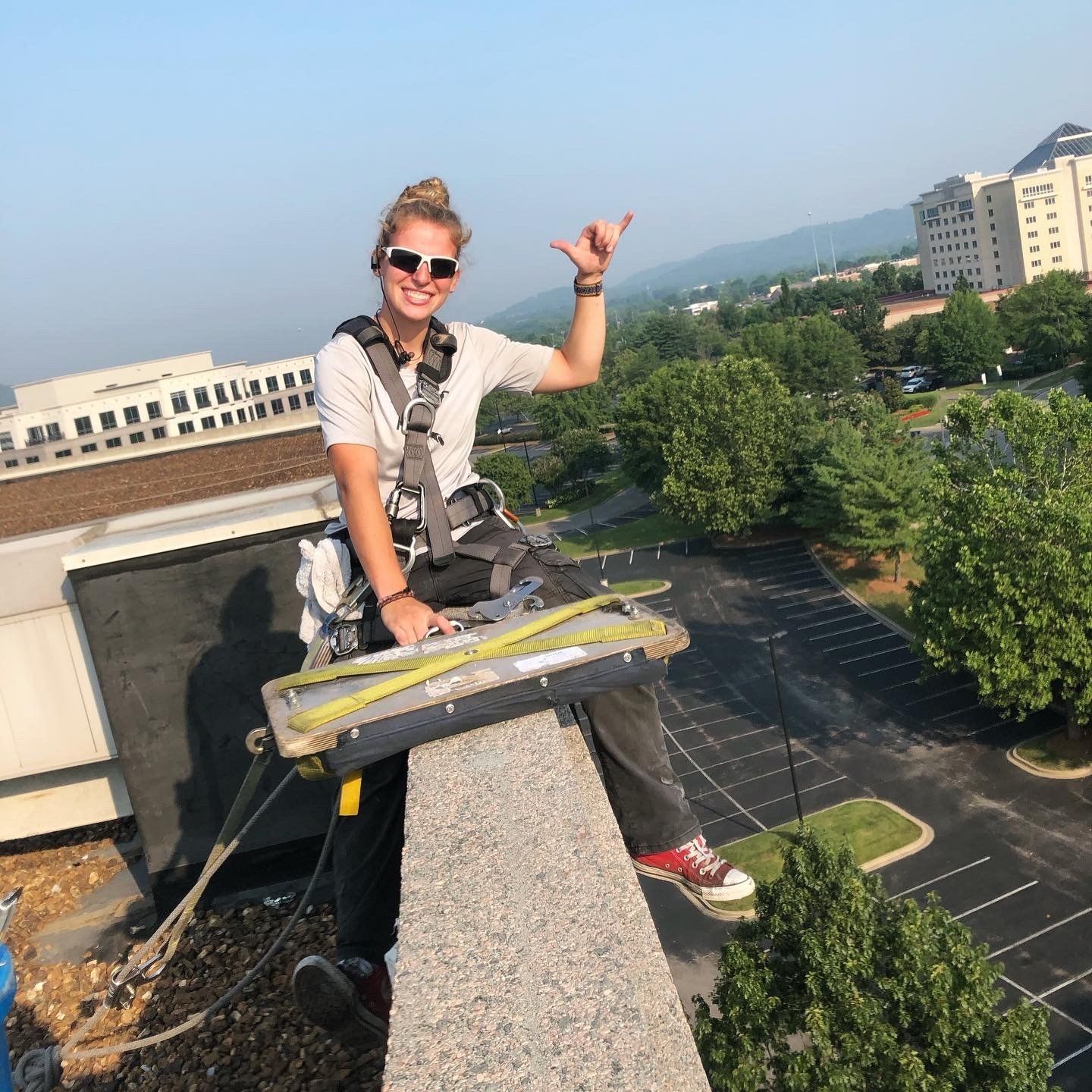
Technicians should understand fall-protection requirements and know how to properly inspect, fit, connect, and use their personal protective equipment.
Training should also teach technicians how to recognize unsafe conditions before work begins.
That is particularly important when accessing roofs, ladders, parapets, elevated work areas, and suspension points.
3. OSHA Safety Training
High-rise window cleaning companies should have a strong working knowledge of applicable OSHA requirements.
Depending on an employee's responsibilities, OSHA 10- or OSHA 30-hour training can provide valuable additional safety education. Supervisors and crew leaders, in particular, benefit from broader training in workplace hazard recognition and safety management.
However, an OSHA card alone does not qualify someone to perform high-rise window cleaning. It should complement task-specific RDS, fall-protection, equipment, and rescue training.
4. Rope Access Training When Applicable
Some buildings involve access challenges that extend beyond straightforward vertical RDS drops.
For companies performing more advanced rope-access work, certifications or training through recognized organizations such as SPRAT (Society of Professional Rope Access Technicians) can demonstrate additional competency.
Rope-access training can be especially valuable when technicians must perform more complex positioning, transitions, façade maintenance, inspections, or difficult-access work.
The important distinction for property managers is understanding what type of access your building requires and confirming that the contractor's technicians are trained for that specific work.
5. Rescue and Self-Rescue Training
One qualification that is sometimes overlooked is rescue preparedness.
A high-rise crew should not depend solely on calling emergency services if a technician becomes stranded or incapacitated while suspended.
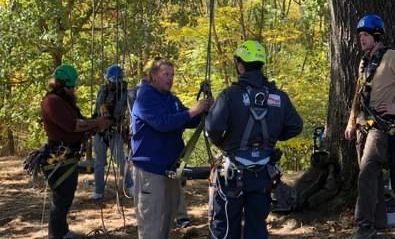
Technicians should practice emergency procedures appropriate to the systems they use, including self-rescue and assisted-rescue techniques.
Ask your contractor:
When was your crew's last hands-on rescue training?
A company should be able to answer that question confidently and explain how rescue preparedness is incorporated into its training program.
6. Equipment-Specific Training
Different buildings require different access methods.
A professional high-rise window cleaning company may use:
- Rope Descent Systems
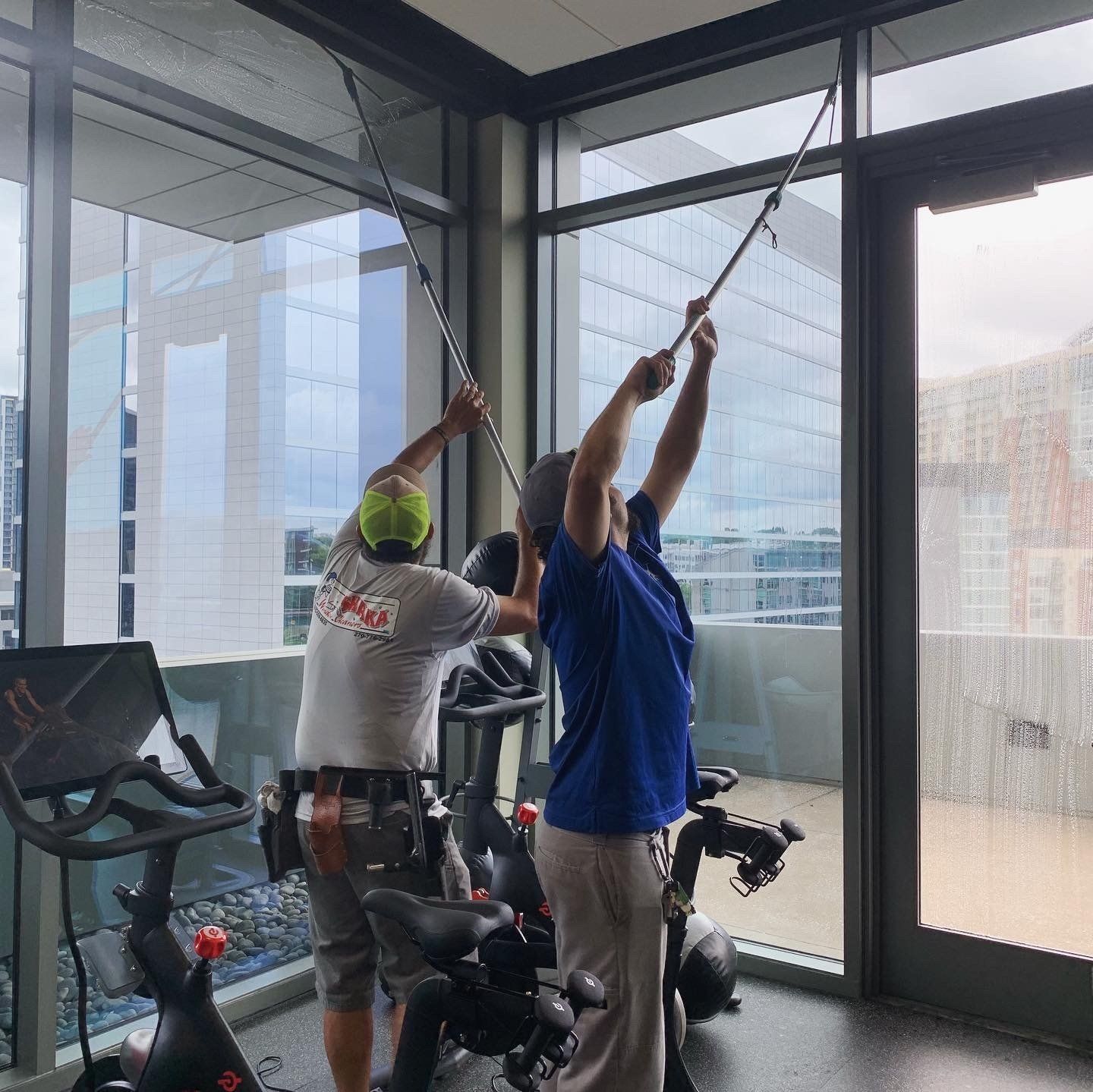
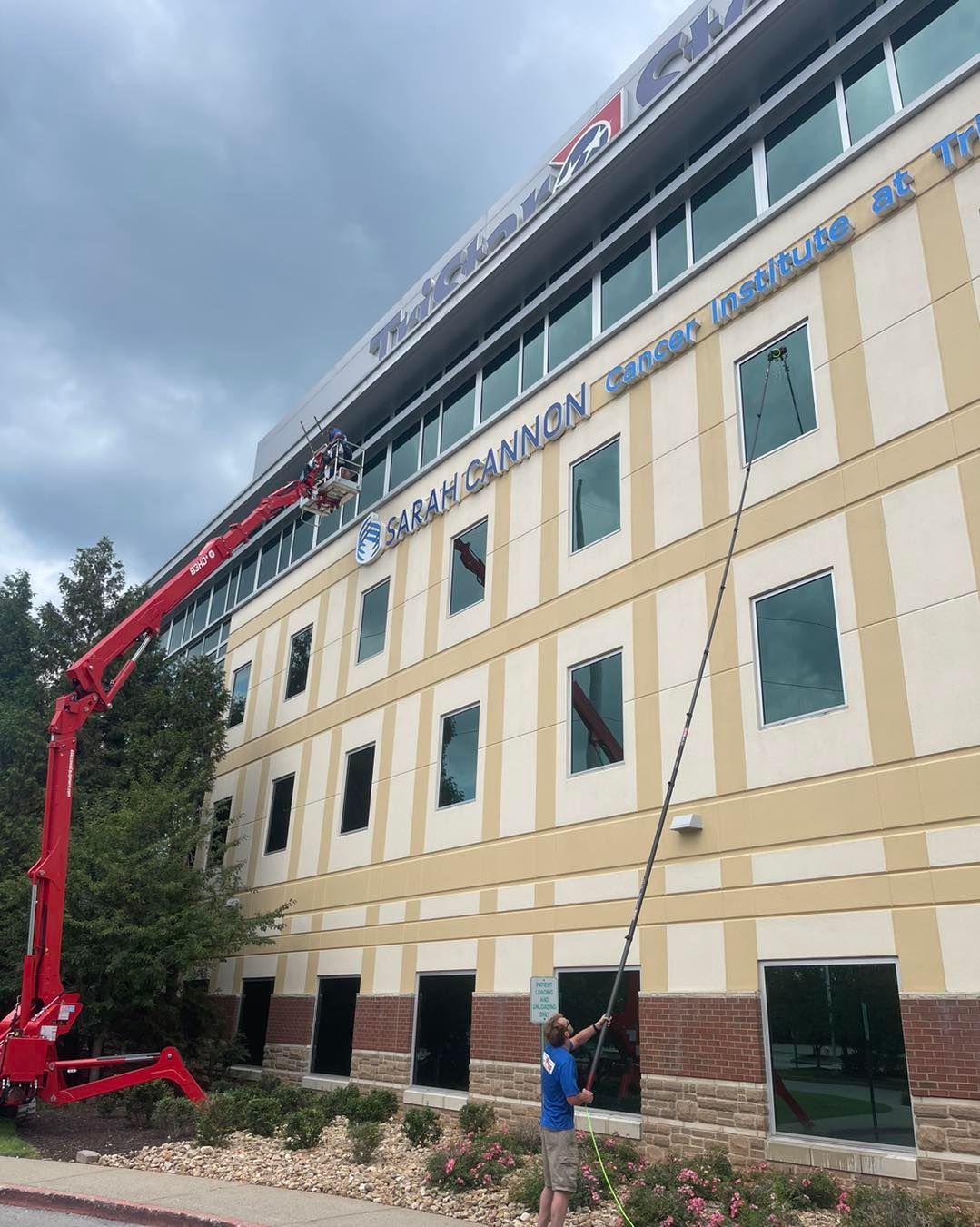
- Water-fed poles
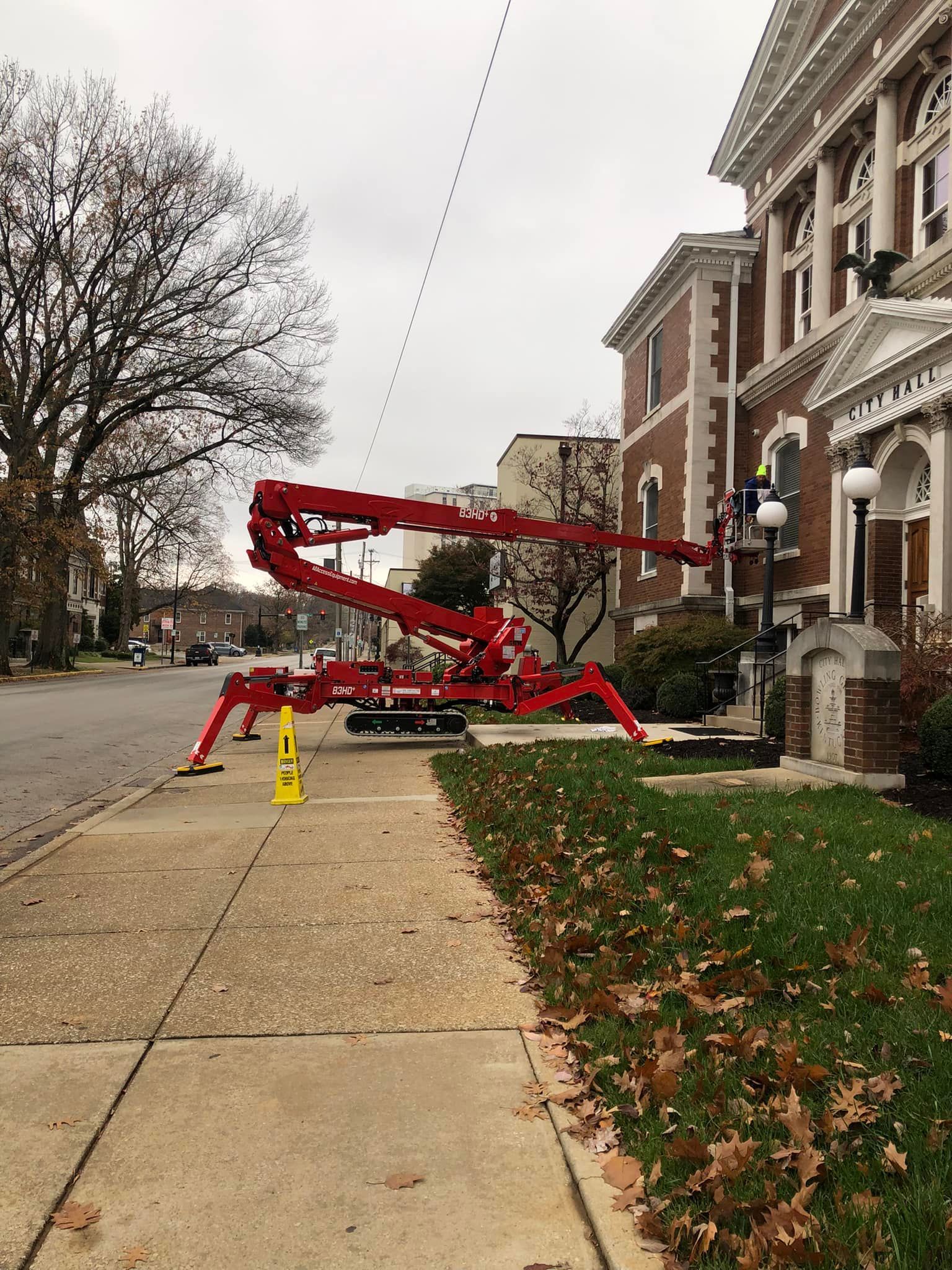
- Boom lifts
- Swing stages
- Aerial or specialty lifts
- Rope-access systems
Technicians should be trained specifically for the equipment they are expected to operate.
For example, experience with RDS does not automatically make someone qualified to operate an aerial lift.
7. First Aid and CPR
First Aid and CPR training are valuable additions to a high-rise crew's safety program.
High-rise technicians frequently work in locations where immediate assistance may not be available. Having trained personnel onsite can improve a crew's ability to respond appropriately while professional emergency assistance is being contacted.
8. Building Anchorage and Rigging Knowledge
Even highly trained technicians cannot safely perform suspended work without understanding the building's anchorage system.
Technicians should know how to review available anchorage documentation, identify designated anchor points, inspect the work area before rigging, and recognize situations where the building may not provide an acceptable means of suspension or fall protection.
Building owners and property managers also have responsibilities related to the systems being provided for suspended work.
Before allowing rope-descent work to begin, make sure your contractor has requested and reviewed the appropriate information concerning your building's anchors and access system.
9. Ongoing Training Matters
Training should not be treated as something an employee completes once and never revisits.
Professional high-rise companies should conduct continuing education and hands-on safety training.
That may include:
- Equipment inspections
- Rescue drills
- Rigging exercises
- Fall-protection reviews
- Hazard-recognition exercises
- Equipment updates
- Jobsite safety procedures
Regular training helps technicians maintain skills while preparing them for unusual situations they may encounter on different buildings.
What Should a Property Manager Ask Before Hiring a High-Rise Window Cleaner?
Instead of simply asking, “Are your technicians certified?”, ask more detailed questions.
Ask what RDS or rope-access training technicians receive, how often they complete rescue training, whether supervisors have additional OSHA education, how equipment competency is documented, and whether the company maintains records of employee training.
You should also ask whether the company uses its own trained employees or relies on subcontractors.
A reputable contractor should be comfortable discussing its safety and training program.
Training Is About More Than a Certificate
There is no single card or certificate that tells you everything you need to know about a high-rise window cleaning technician.
The strongest contractors combine formal education with hands-on training, documented competency, equipment-specific instruction, rescue practice, experienced supervision, and continuing safety education.
For building owners and property managers, the goal isn't simply to find someone capable of getting over the edge.
It's to hire a team that understands how to plan the work, recognize hazards, use the correct equipment, respond to an emergency, and complete the job professionally.
Choosing a High-Rise Window Cleaning Company in Nashville
If you manage a multi-story commercial property in Nashville, ask prospective window cleaning contractors about their training program before comparing price.
At Shaka Window Cleaners, our approach to high-rise and difficult-access work emphasizes trained technicians, documented safety procedures, proper equipment, rescue preparedness, and ongoing education.
For buildings over four stories, particularly those requiring Rope Descent Systems or rope access in Nashville, choosing an experienced and properly trained contractor can make a significant difference in how safely and efficiently the work is completed.